Shoulder pain is a VERY common gym injury.
A large part of my client base in Taunton has this problem.
And it can be one of the most subborn if not treated correctly.
Doing the right thing is far important than working hard doing the wrong thing.
And yet we work hard doing things that will only bring minimal results.
You warm up properly – you do your banded rotator cuff exercises – you stretch your pecs.
Stretch, stretch and stretch again.
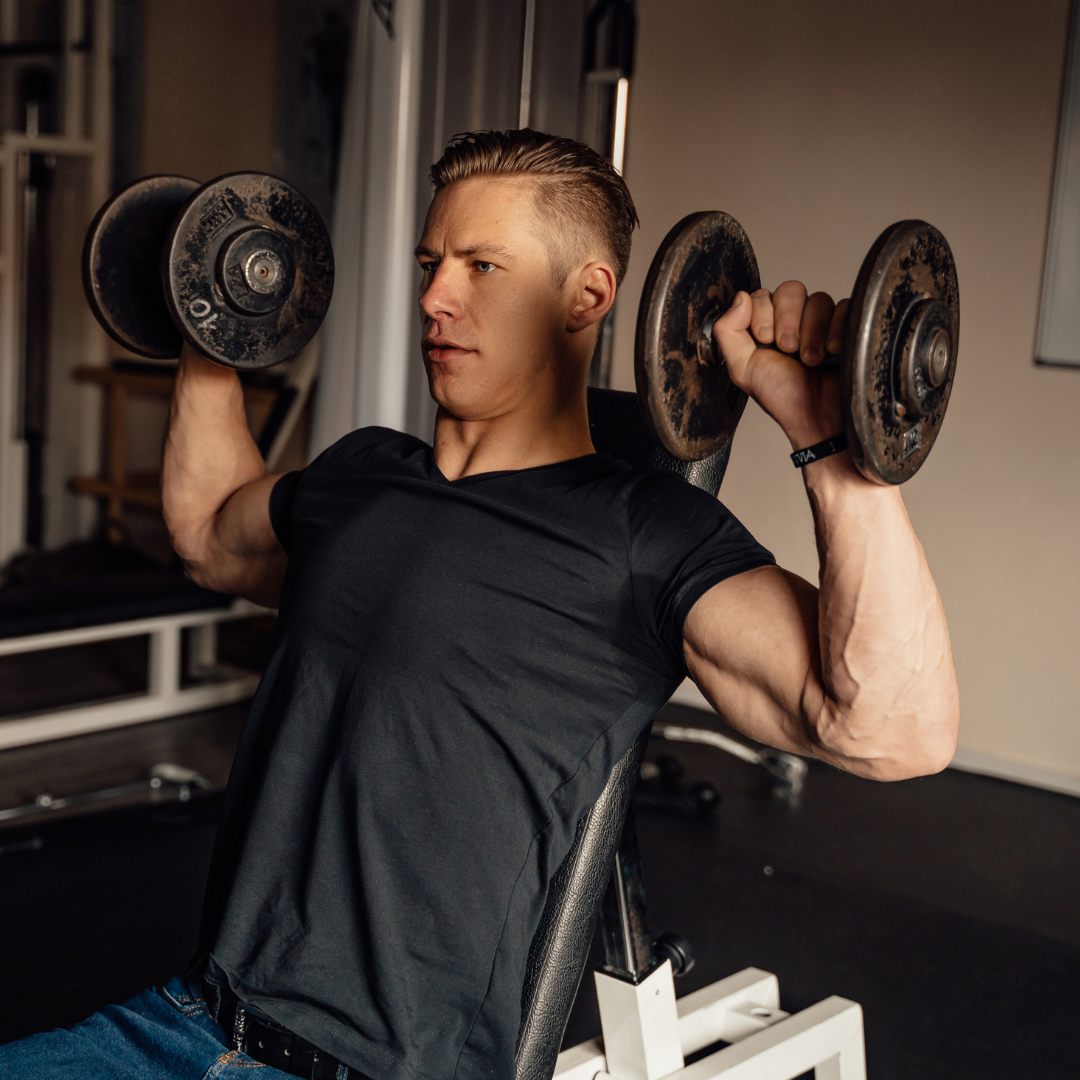
You’ve even swapped barbell presses for dumbbells just to be “kinder” to your shoulders…
And yet — that familiar pinch, ache, or restriction is still there every time you go overhead.
You want to train but your shoulder is holding you back.
If you train hard, you probably know your body well.
But when pain keeps showing up despite doing all the “right” things, it can start to mess with your confidence — not to mention your performance.
Make no mistake, I’ve been there myself.
As an avid, athlete, gym goer and personal trainer, I had recurring shoulder pain since my university years.
I spent hours on a variety of rotator cuff exercises. I even released a variety of videos on how to perform these exercises.
They never helped though – not one bit. It was frustrating as hell.
But ultimately I was barking up the wrong tree. treating the shoulder as the culprit when it was anything but.
💥 The Shoulder Isn’t the Problem — It’s the Victim
Here’s something I say to nearly every client who comes in with shoulder pain:
“The shoulder is rarely the issue — it’s where the issue ends up.”
In the Be-Activated system, we look at the body as a whole, integrated sequence — not just individual joints and muscles.
And the shoulder? It’s not supposed to be the first line of defence.
That role belongs to Zone 1 — the diaphragm, psoas, and glutes.
Basically your hip muscles
Andy – those muscles are nowhere near my shoulders. What are you talking about?
Well these deep, powerful muscles are responsible for your breathing, your posture, your core stability, and the initiation of movement.
When these muscles aren’t firing properly, your body still needs to function — so it compensates.
That compensation often shows up in your shoulders, traps, and neck.
The result?
A shoulder that’s always “on,” constantly bracing, and trying to stabilise for problems elsewhere in the body.
🌬️ The Breathing–Shoulder Connection Most Lifters Miss
It might sound strange, but in our 30 Mins Taster Session, I’ve relieved shoulder pain without even touching the shoulder — just by addressing how someone is breathing.
Granted, I have NOT relieved the pain completely in that session but it still shows how seemingly unimportant parts play a vital role in the function of your shoulder.
It often feels looser, more flexible with smoother movement and pain is less.
When your diaphragm isn’t functioning properly (which is shockingly common), your body shifts breathing up into the chest and neck.
That means the scalenes, pecs, and traps are working overtime — even before you pick up a barbell.
Add in loaded overhead movements like shoulder press, and you’ve got a recipe for pain, tightness, or restricted range of motion.
When we reset the diaphragm, everything changes:
✅ Shoulder range improves
✅ Tension drops
✅ Lifts feel smoother, safer, and stronger
It’s not magic. It’s just the body working in the right sequence again.
If you’re not able to get into me. you can learn this really simple technique by buying my Pain Relief Programme – The Natural Solution to Pain here
❌ What Massage and Physio Often Miss
If you go to a sports massage therapist with shoulder pain, they’ll likely work into your traps, pec minor, or rear delts.
It’ll feel good — for a day or two. Then the pain creeps back in.
If you go to a physio, you’ll likely be assessed locally, get some exercises for scap control or cuff strength, and be told to work on thoracic mobility.
Helpful, yes — but only if the shoulder was the true problem.
The reason these approaches often fall short is they treat the site of pain, not the cause of dysfunction.
✅ How Be-Activated is Different
Be-Activated doesn’t chase pain.
It looks for the compensation pattern behind the pain.
Using muscle testing, we identify which of your core drivers (like the diaphragm, psoas, or glutes) aren’t doing their job.
Then we use powerful hands-on activation techniques to switch those muscles back on — resetting your body’s movement priorities.
Instead of calming your shoulder down, we make it stop doing all the work in the first place.
I’ve worked with lifters who couldn’t press overhead without pain — and within one session, they felt freer, looser, and more confident under the bar.
Not because we treated the shoulder, but because we got their body out of survival mode.
If you live in or around Taunton then you have access to this treatment very nearby
💪 The Bottom Line
If your shoulder keeps breaking down, the answer probably isn’t in another rotator cuff drill or new press variation.
It’s in your breathing, your hips, and the way your nervous system is prioritising movement.
Fix the root — and the shoulder finally gets a break.
👉 Want to Experience It?
If you live in or around Taunton, BOOK a 30-minute Be-Activated Taster Session and let’s find out what’s really behind your shoulder pain.
✅ Not just relief, but a reset.
✅ Not just another stretch, but a solution.
Click the button below to get started.